|
|
|
Randall
Kaufmann's "Stimulator"
|
|
The
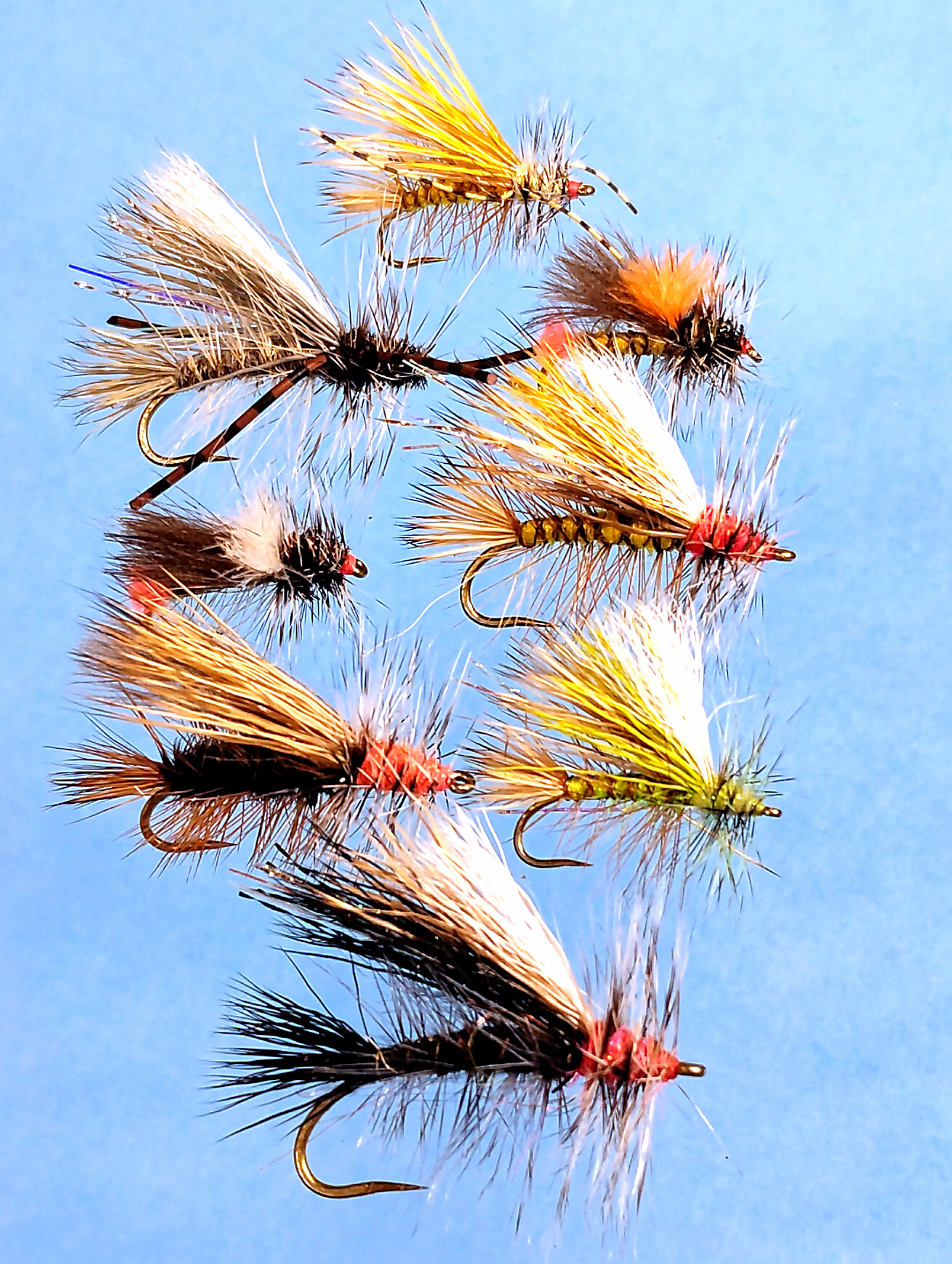
Stimulator Story as told by Randall Kaufmann
 Many
tyer–anglers have asked me about the origin story of the
Stimulator and the name. Many
tyer–anglers have asked me about the origin story of the
Stimulator and the name.
To clarify erroneous and fictitious
claims, here it is! The pattern that became the Stimulator has its origins on
the Deschutes River in Oregon, likely dating back to the
1960s or earlier. My friend, Rick Verheghe (angler-boatman
extraordinaire) and I were fishing the Deschutes River near
Whitehorse Rapids one memorable evening in 1980. Rick was
having amazing success with a fly labeled "Hank’s
Special" that he salvaged from a dusty fly bin at the famous
Oasis Café in Maupin, owned by legendary Deschutes
personality Mike McLucas and his wife Gloria.
I
had seen the fly there but paid no attention to it, until
now. Fishing Rick’s fly was crazy effective. Back
at my tying vise I refined the tying style, tweaked the
colors and changed materials, and began fishing it with
remarkable success. I shared the fly with David Lambroughton,
(renowned angler-photographer and creator of Fly Fishing
Dreams calendar) who was guiding for us on the
Deschutes at the time. Same success.
 One
evening in 1981, on our cabin deck overlooking the Deschutes
River, David and I were discussing catchy fly names. David
mentioned my Simulator name (a catch-all nymph dating
to the early 1970s) as an example. That led David, naturally
if you know him, to think that Stimulator would be a
great name for the fly. He was right! The Stimulator first
appeared in the Kaufmann Streamborn catalog in 1982.
Eventually, there were over 120 variations of colors,
styles, specific stonefly imitations, and sizes — they occupied
an entire section of the Kaufmann fly display. One
evening in 1981, on our cabin deck overlooking the Deschutes
River, David and I were discussing catchy fly names. David
mentioned my Simulator name (a catch-all nymph dating
to the early 1970s) as an example. That led David, naturally
if you know him, to think that Stimulator would be a
great name for the fly. He was right! The Stimulator first
appeared in the Kaufmann Streamborn catalog in 1982.
Eventually, there were over 120 variations of colors,
styles, specific stonefly imitations, and sizes — they occupied
an entire section of the Kaufmann fly display.
In short, Hank started it, Rick introduced it to me, David
named it, I refined it, and along with Umpqua, popularized
it. No others knew of, or were in any way contacted or
otherwise associated with designing or naming the
Stimulator.
There you have it—the origin of, and naming of the
Stimulator!
—Randall Kaufmann
|
Why
is the Stimulator SO effective?
Much of the Stimulator’s success can be attributed to
its versatility, as mentioned above, but perhaps it is the
surface impression and light pattern it creates. Maybe the
silhouette, color, animation, translucence, etc. is
attractive, or other characterizes not imagined or maybe a
combination of many factors. It might simply be suggestive
or intriguing enough to arouse curiously. Whether you are
“fishing the water” at home or those in New Zealand,
Alaska, or Argentine, Stimulators are usually on the grab
list.
|
|
How to
Fish the Kaufmann Stimulator
Stimulators are my favorite surface fly and often it is
the only fly I tie onto my leader during a day’s fishing.
It is versatile. I fish it as an imitator, hatch matcher,
attractor and exciter. It is my favorite probe when nothing
seems to be happening. It is also a crossover and multiple
hatch pattern. I cast it in slow and fast water, lakes (I do
not refer to lakes as stillwaters because they are not
still), spring creeks, and freestone waters, from Patagonia
to the Arctic, lowland bluegill ponds to alpine golden trout
waters—for any freshwater fish. I like it in bright
sunlight, after dark, and anytime in-between. Depending on
its size, shape and colors, and how it is fished or
manipulated, the Stimulator can represent stone, caddis,
crane, dragon and damsel flies, plus moths, hoppers,
crickets, cicada and other terrestrials. Fish it with a
natural drift, skate, twitch, drag, and/or dab them across
currents.
It is also
effective when fished drowned with the above methods.
Sometimes I strip it sunk or skip-skate it quickly across
the current. I fish a size 8 as often as a size 14 but
sometimes size 16 and 18 produce the best action, especially
on slower waters and during small size hatches mid-to late
summer. I especially like it for imitating caddis in broken
water and for skittering it across lake waters, especially
during a traveling sedge (caddis) hatch or as a terrestrial
imitation. It is also my favorite adult stonefly pattern,
and I adapt it for specific hatches, alternating the size
and color. The rubber leg versions are especially useful for
attractor style and hopper action. Splat undercut and grassy
banks and pockets. Hop, skitter, skate, drown and strip it.
After dark a large black pattern skated or chugged can
represent anything that might purposely or inadvertently be
on or in the water, including terrestrial animals. Even when
there is no hatch or surface activity and when a nymph might
be more productive, I still fish it because, like any high
floating dry fly, it is fun, watching it bounce and glide
along currents expecting a visual take every inch of the
drift.
Before fishing I spread the wing wide and tall for a broader
silhouette, stability, and because it helps trap air
bubbles. It also allows light and water to penetrate the
wing helping to create realism and translucence, and perhaps
the blurred motion of fluttering wings or animation. I
always like to fish a “fresh” Stimulator. Once it has
become bedraggled or soaked, I tie on a fresh one. Stimulator
Pattern Variation History
The Stimulator first
appeared in the 1982 Kaufmann Streamborn catalog in three
colors. As new materials became available and popular they
were incorporated into Stimulators. Eventually Umpqua
produced 120 combinations—standards, crystal, rubber legs,
cdc, foam and combinations thereof. Kaufmanns Streamborn had
hundreds of dozens on display. They attracted a lot of
attention. Contemporary Stimulators have undergone several
metamorphoses. Some are hatch-specific, others
impressionistic, representing many stonefly and caddis
hatches, including the Black (Pteronarcys), Golden (Acroneuria),
Yellow (Little Yellow Stone – Sallies (Isoperla mormona)),
Orange (Dicosmoecus) and so on. There is a Stimulator for
every season and water type. |
| |
|
See
Randall and Mary Kaufmanns book
Fly
Patterns
for
many more of the ORIGINAL STIMULATOR patterns! |
|
| |
How
to Tie the ORIGINAL and REAL Stimulator By Randall Kaufmann
I tie Stimulators on Tiemco 200RBL hooks for no other
reason than aesthetics, but use any hook you like. I like the
tail short and spread wide and the wing somewhat sparse,
"airy" and spread wide too. Tie in a mono loop to attach
a dropper if you like. Palmered saddle hackle should be
stiff and tapered, not oversize. Any color hackle
combinations work but my favorites are brown and furnace
with natural grizzly palmered through the thorax. Abdomen
and thorax dubbing is your choice—I mostly like bright
colors. Antron is good. Also, I developed several specific
Kaufmann Blends, marketed by Wapsi Fly Co, that are often a
mix of a dozen colors of several different materials. Hold
them up to the light and their colored translucence is
amazing. I like to pick out the thorax.
Elk is preferred for the wing. Stack and flare it wide. An
overwing of calf tail or body hair provides visibility. Add
a couple strands of Krystal Flash, other flash or rubber
legs if you wish. Pick colors that match your fishing needs.
If you like fishing after dark, tie some big black. If you
fish Little Yellow Sally hatches, tie small
yellow/chartreuse. For caddis, match the color and size,
etc. Colors in my fly boxes include yellow, orange, lime,
peacock, gold, royal, gray, purple, black, and tan.
|
|
| CLASSIC
STIMULATOR |
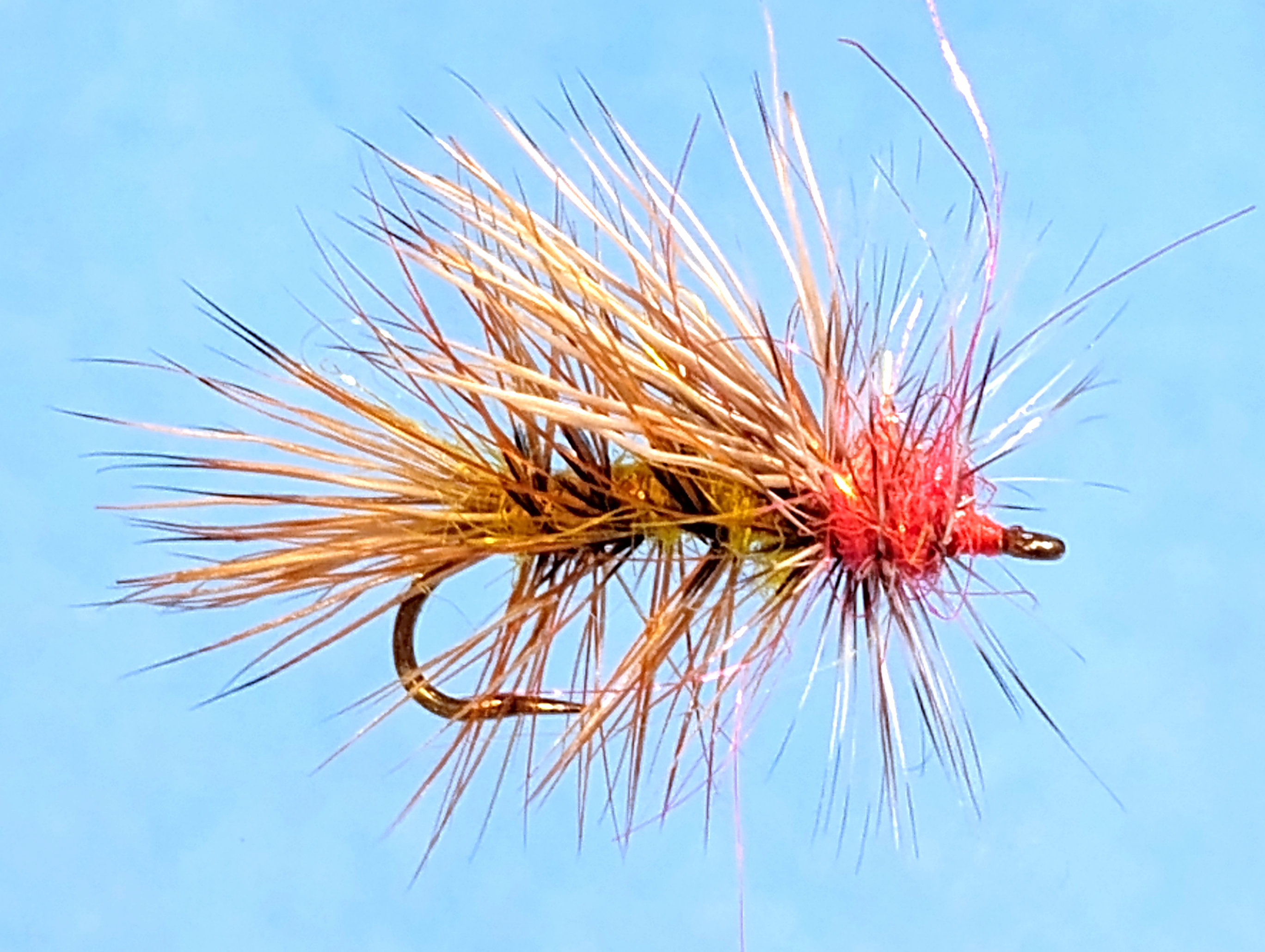 |
STIMULATOR, YELLOW
Hook: 200RBL size 8-16
Thread: Fluorescent fire orange
Dropper Loop: Clear mono
Tail: Natural light elk
Rib: Gold wire
Abdomen: Fl. yellow Antron with palmered Badger or Ginger saddle
Wing: Natural light elk spread wide
Hackle: Natural grizzly saddle palmered through thorax
Thorax: Amber goat
|
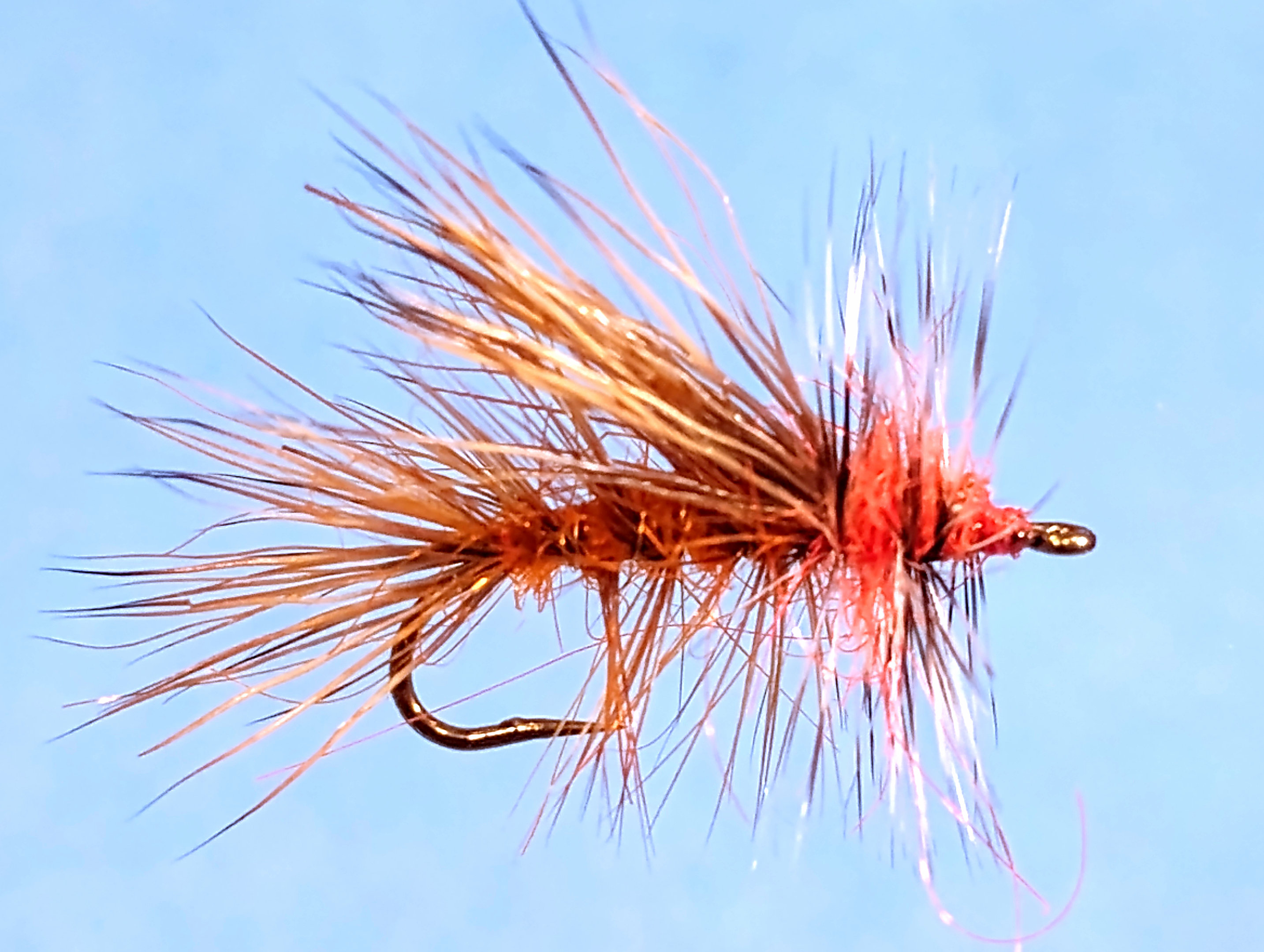 |
STIMULATOR, ORANGE
Hook: 200RBL size 8-16
Thread: Fluorescent fire orange
Dropper Loop: Clear mono
Tail: Natural dark elk
Rib: Gold wire
Abdomen: Fl Orange Antron with Furnace saddle palmered
Wing: Natural dark elk
Overwing: White calf or flame glo yarn
Hackle: Grizzly saddle palmered through thorax
Thorax: Amber goat
|
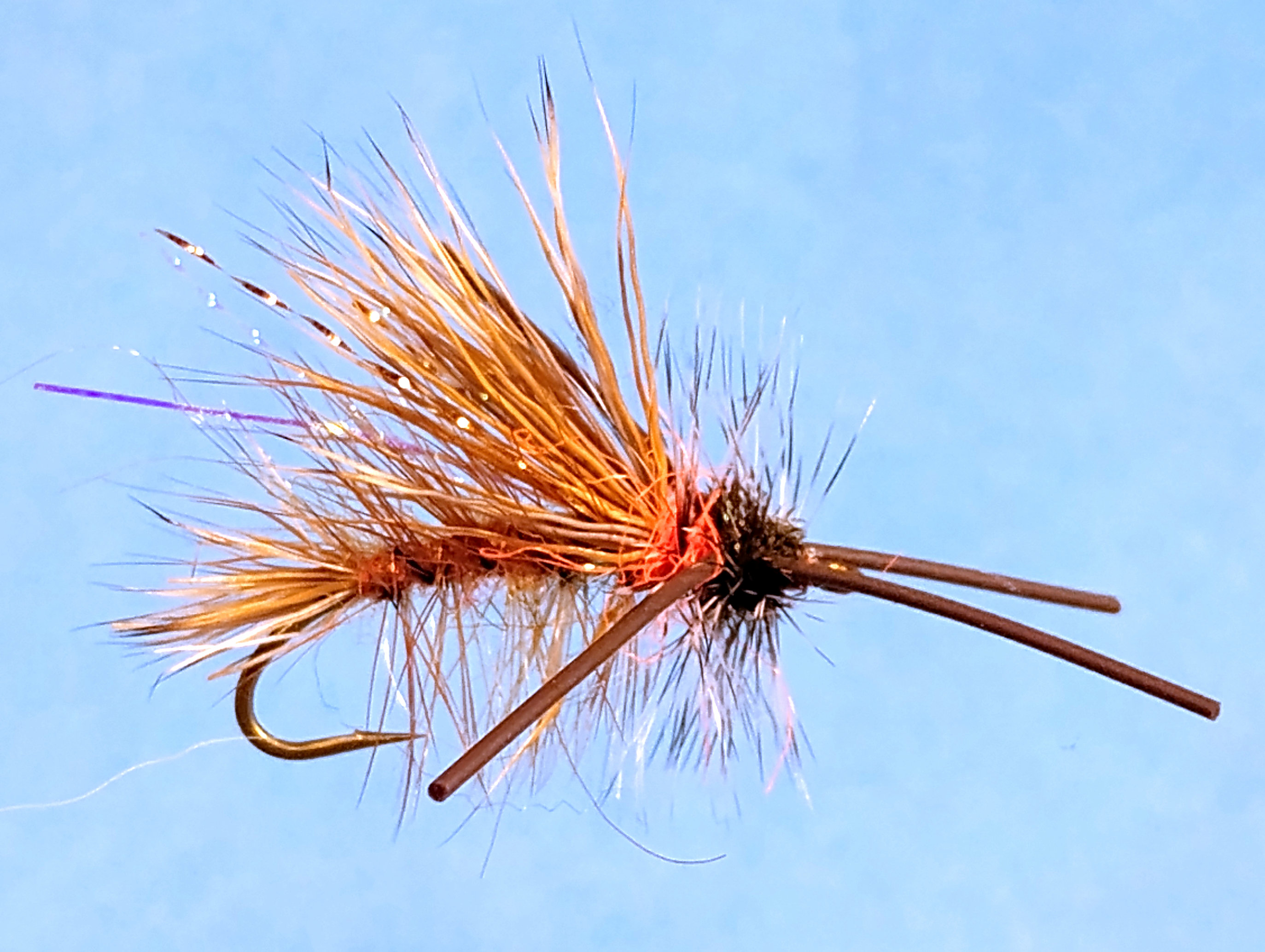 |
STIMULATOR,
RUBBER LEG, GOLDEN
STONE
Hook: 200RBL, size 8-12
Thread: Fluorescent fire orange
Tail: Elk dyed gold, flared
Rib: Copper wire
Abdomen: Kaufmann golden stone mix or other
Palmer: Light or golden-brown saddle
Flash: 2 copper, 1 pearl, and 1 gold Krystal Flash, and 2
strands of Mirror Flash
Wing: Elk dyed gold, medium short and wide
Hackle: Natural grizzly saddle palmered through thorax
Legs: Round dark brown rubber
Thorax: 2 part, Kaufmann Stimulator Flame or STS Tri Lobal
Fl. Flame, or other and peacock
Note: Leave plenty of space for 2-part thorax, pick out
flame dubbing. This is my “fish anywhere” Stimulator,
always for golden stones.
|
|
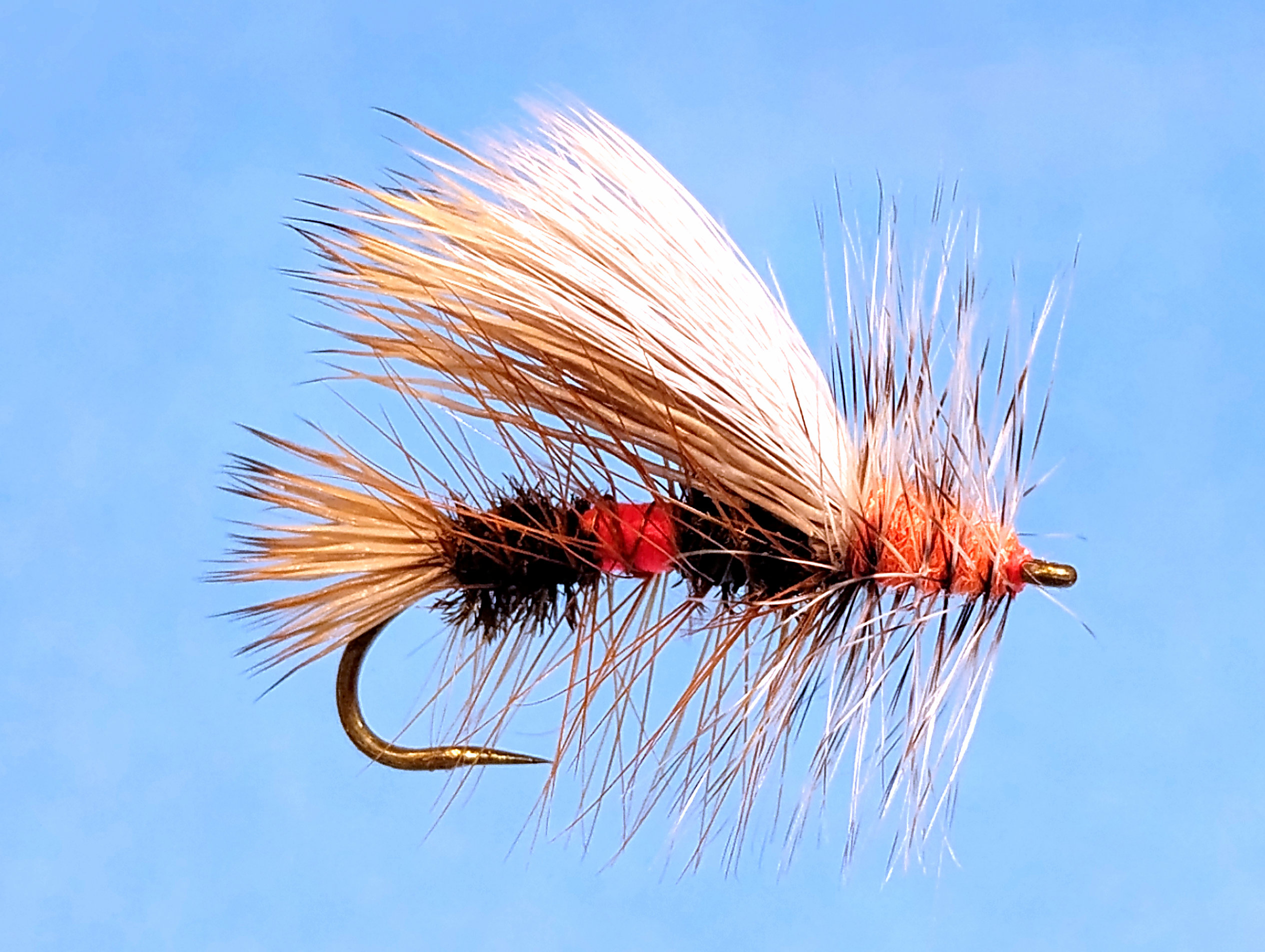 |
STIMULATOR, ROYAL
Hook: 200RBL size 8-16
Thread: Fluorescent fire orange
Tail: Natural medium-dark elk
Rib: Gold wire
Abdomen: Peacock, Fl Red SLF, peacock
Palmer: Furnace saddle
Flash: 2 pearl, 1 red and 1 gold Krystal Flash and 2 strands
of mirror flash
Wing: Natural medium-dark elk
Overwing: White calf or flame glo yarn
Hackle: Natural grizzly saddle palmered through thorax
Legs: Speckled white (white/black) Tarantua-Legs
Thorax: Pearl ice dub or Flame Kaufmann Stimulator Blend |
|
CRYSTAL
STIMULATORS
Crystal Stimulators are my favorite. They have a triple
stacked multicolored wing—three materials staggered for
floatability, stability and visibility. Two under layers are
usually elk, the best floating hair. Top wing is usually
white calf or colored synthetic for visibility. All
incorporate a little Krystal Flash, Mirror flash and
Flashabou. Some have rubber legs adding animation. Colors
include yellow, orange, pearl, lime, black.
|
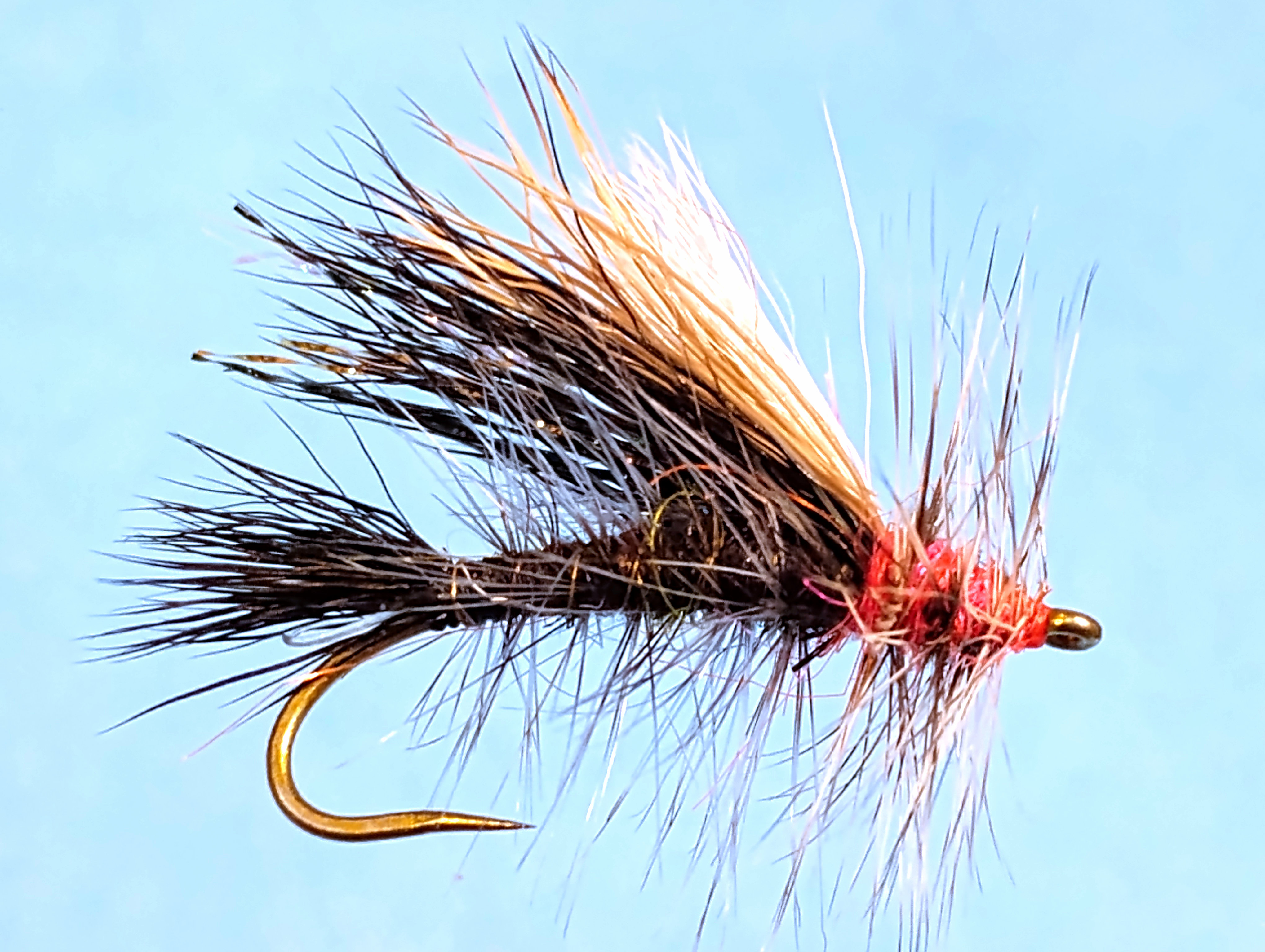 |
CRYSTAL
STIMULATOR, BLACK
Hook: 200RBL size
8-16
Thread: Fluorescent fire orange
Tail: Black dyed medium elk
Rib: Gold wire
Abdomen: Black Antron
Palmer: Grizzly saddle
Wing: Black dyed medium elk
Overwing:White Elk, Deer or Calf Body or tail
Hackle: Natural grizzly saddle palmered through thorax
Thorax: Flame SLF or flame Kaufmann Stimulator Blend
Note: I
always add flash and an indicator overwing to stimulators,
but yellow, tan and orange is the original pattern.
|
|
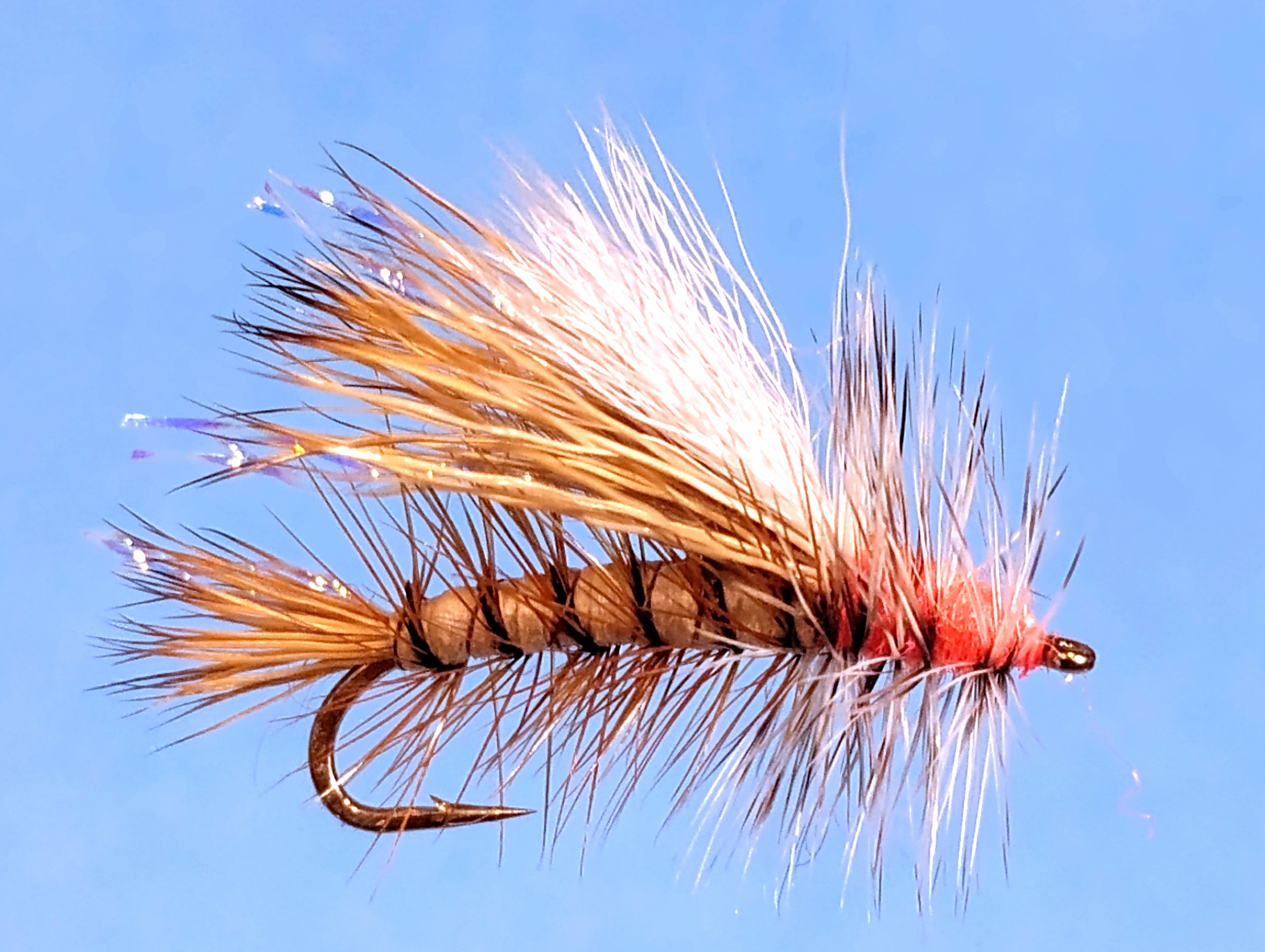
CRYSTAL
STIMULATOR, TAN
Hook:
200RBL size 8-16
Thread: Fluorescent fire orange
Droppewr: Clear mono
Tail: Natural light Elk
Rib: Gold wire
Abdomen: Tan SLF Prism dubbing palmered with Furnace saddle
Flash: 2 pearl and 2 strands gold Krystal Flash,
and/or Mirror Flash or Flashabou, your choice
Underwing: Natural light elk
Overwing: White calf body or fl pink glo yarn tuff,
or your choice
Hackle: Natural grizzly saddle
Thorax: Pearl Ice Dub, or flame Stimulator Kaufmann
Blend, or your choic
|
|
|
|
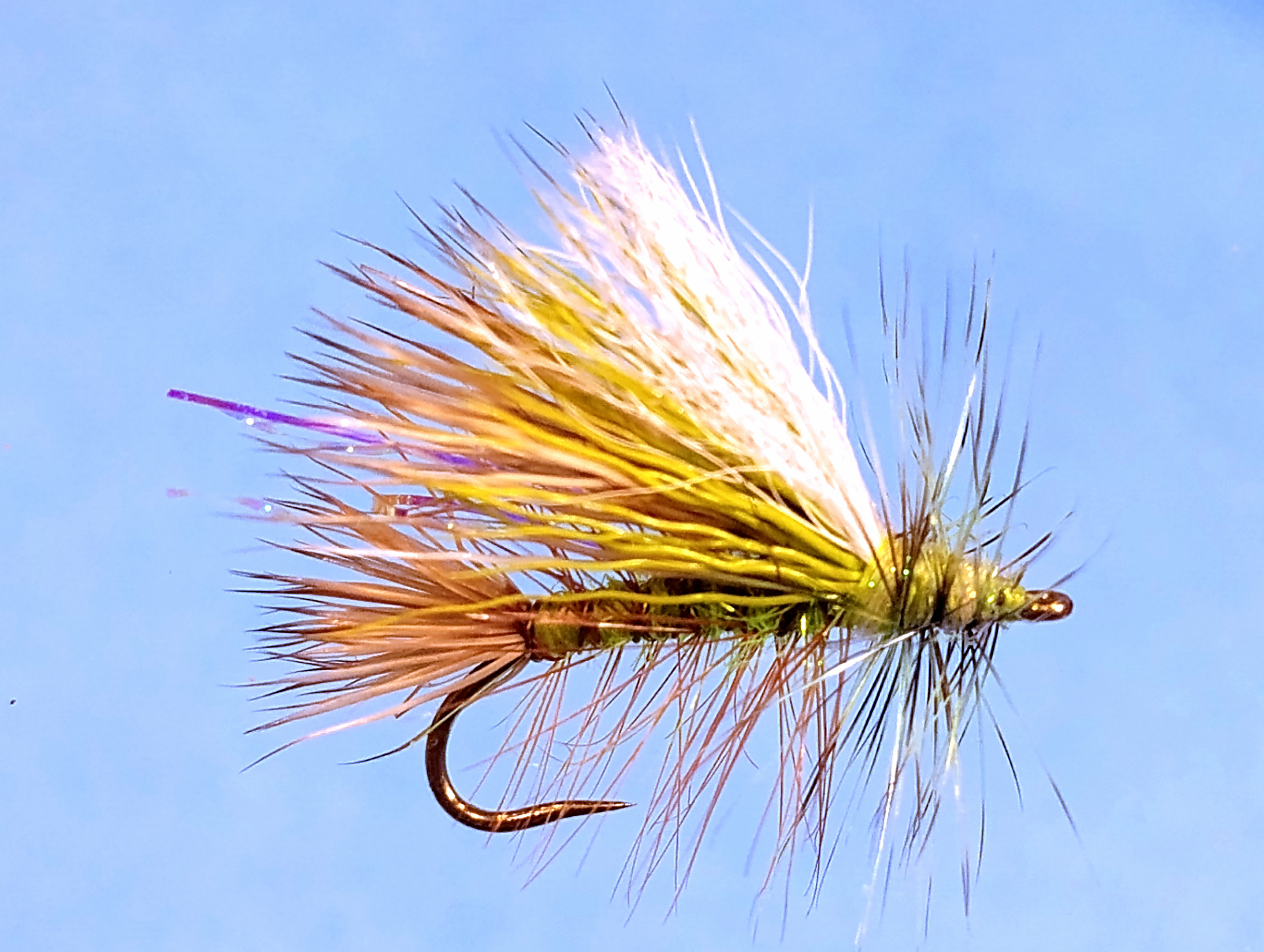
CRYSTAL
STIMULATOR, LIME
Hook:
200RBL size 8-16
Thread: Fluorescent fire orange
Tail: Elk dyed fl lime
Rib: Gold wire
Abdomen: Fluorescent lime Antron dubbing
Palmer: Grizzly saddle dyed lime
Flash: 2 pearl and 2 strands lime Krystal Flash,
and/or Mirror Flash or Flashabou, your choice
Underwing: Natural dark under light elk dyed
fluorescent lime
Overwing: White calf body or fl pink glo yarn tuff,
or your choice
Hackle: Natural grizzly saddle
Thorax: Pearl Ice Dub, or flame Stimulator Kaufmann
Blend, or your choic
|
|
|
|
|
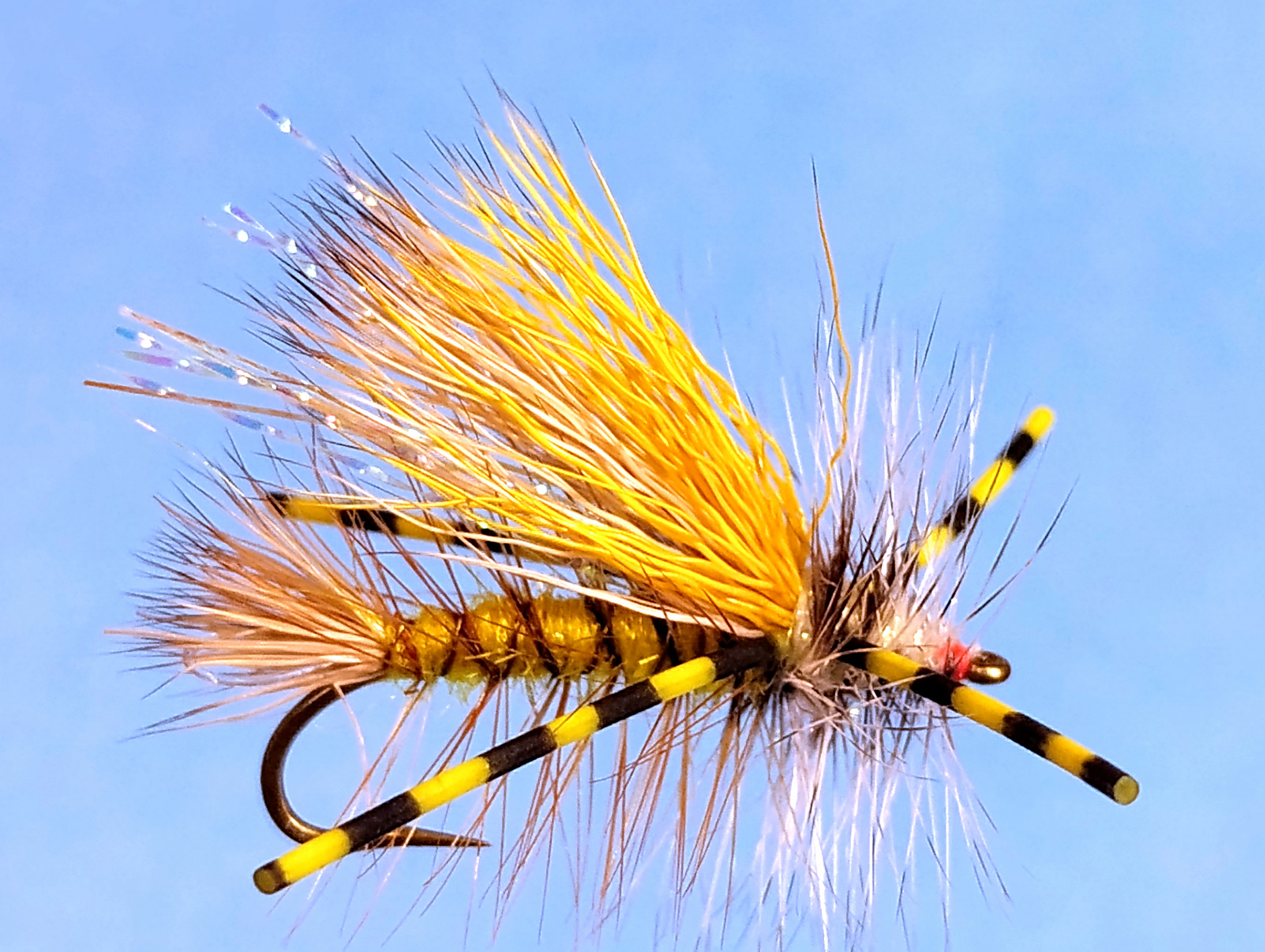
CRYSTAL
STIMULATOR, RUBBER LEG, YELLOW
Hook:
Tiemco 200R, sizes 8-18
Thread: Fluorescent Fire orange
Tail: Elk dyed yellow
Rib: Fine gold wire
Abdomen: Fluorescent yellow Antron
Palmer: Saddle hackle, grizzly dyed yellow, or ginger
Flash: Pearl, copper, gold, fluorescent yellow, etc. Krystal
Flash and pearl Mirror Flash, sparse
Underwing: Natural light elk over elk dyed yellow
Overwing: White calf or Antron
Legs: Round rubber, black/yellow
Hackle: Natural grizzly saddle, palmered through thorax
Thorax: Flame Stimulator Kaufmann Blend or pearl Ice Dub,
your choice
|
|
|
CDC
STIMULATORS
Light, fluffy, quiet water presentation for smaller
stone and caddis hatches. Because of its unique fiber
construction CDC creates an amazing “light impression”
on the water’s surface and traps air below the water’s
surface. Change color to fit, olive, gray, black are
favorites. I also incorporate CDC as an underwing on other
Stimulators.
|
|
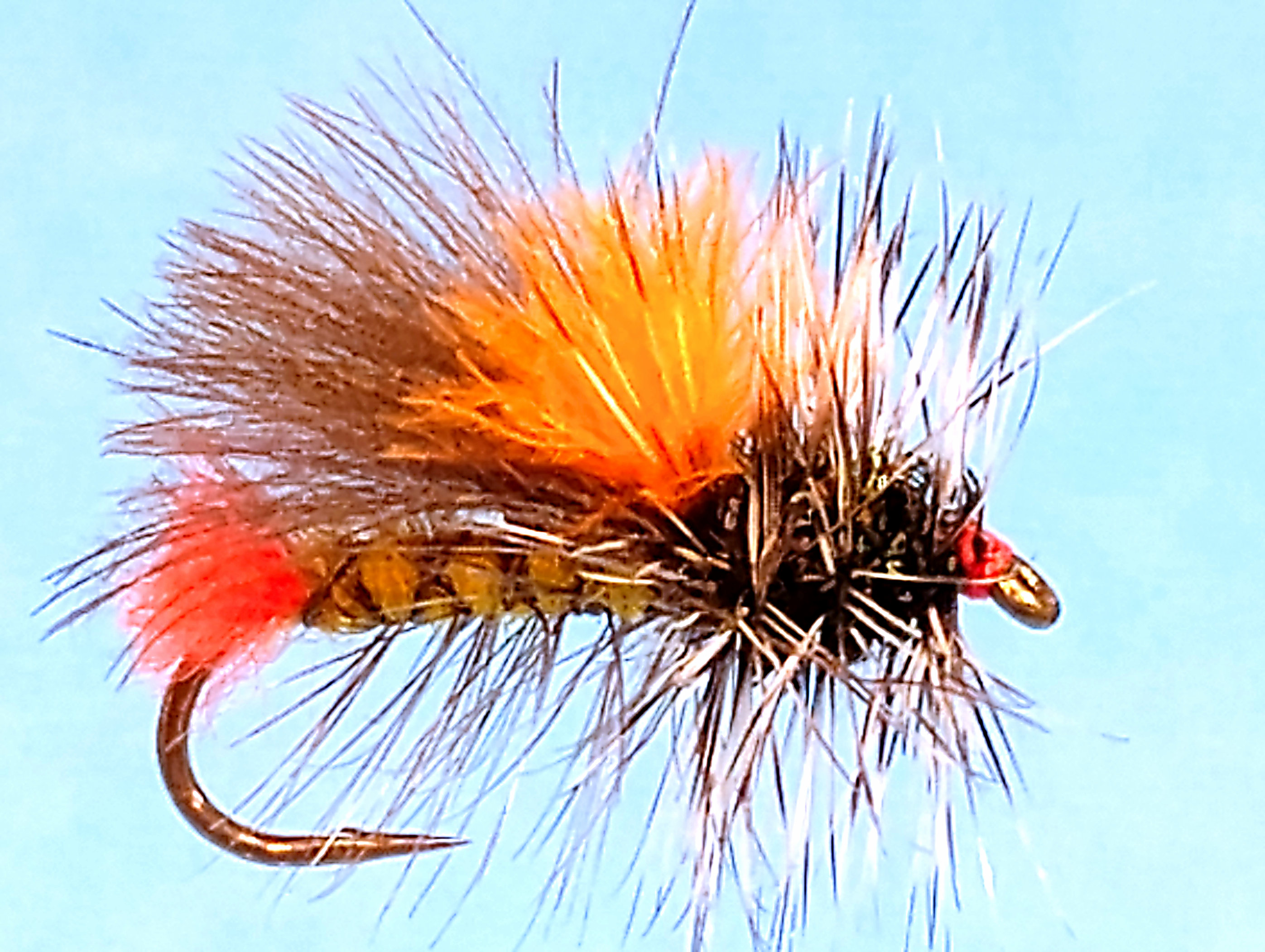
CDC
STIMULATOR
Hook: Tiemco 5212, 900BL, sizes 10-14
Thread: Fluorescent Fire orange
Tail: Fl Glow yarn, tied short, color of choice
Rib: Fine gold wire
Abdomen: Antron dubbing, color of choice, and palmered dun
saddle hackle
Wing: Natural dark CDC
Indicator: White, black or orange CDC tuff
Hackle: Grizzly
Thorax: Peacock
|
|
|
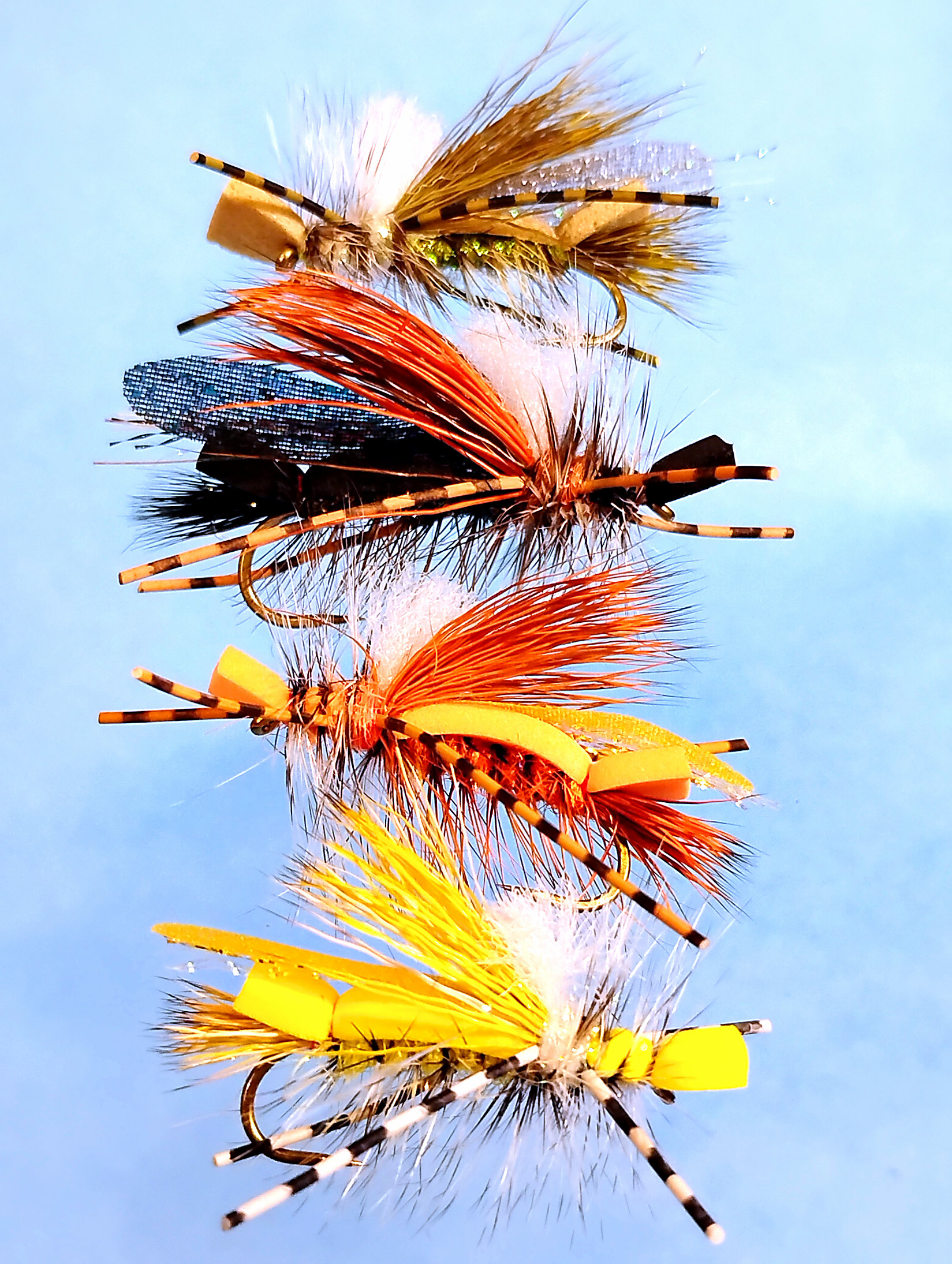
FOAMULATORS
(aka Foam Stimulator)
Foam
flies float well, and depending on how they are tied, they
float flat, flush or low on the water’s surface. Add
rubber legs, a translucent veined down-wing under a hair
wing, plus a little flash and a white or colored overwing as
a strike indicator and you have a big-fish, heavy-water fly.
These capitalize upon the larger size stonefly and hopper
hatches and are also a gaudy attractor. We like to splat and
twitch and pull them cross current, often half sunk.
Favorite colors include Gold, yellow, orange, olive, black
|
|
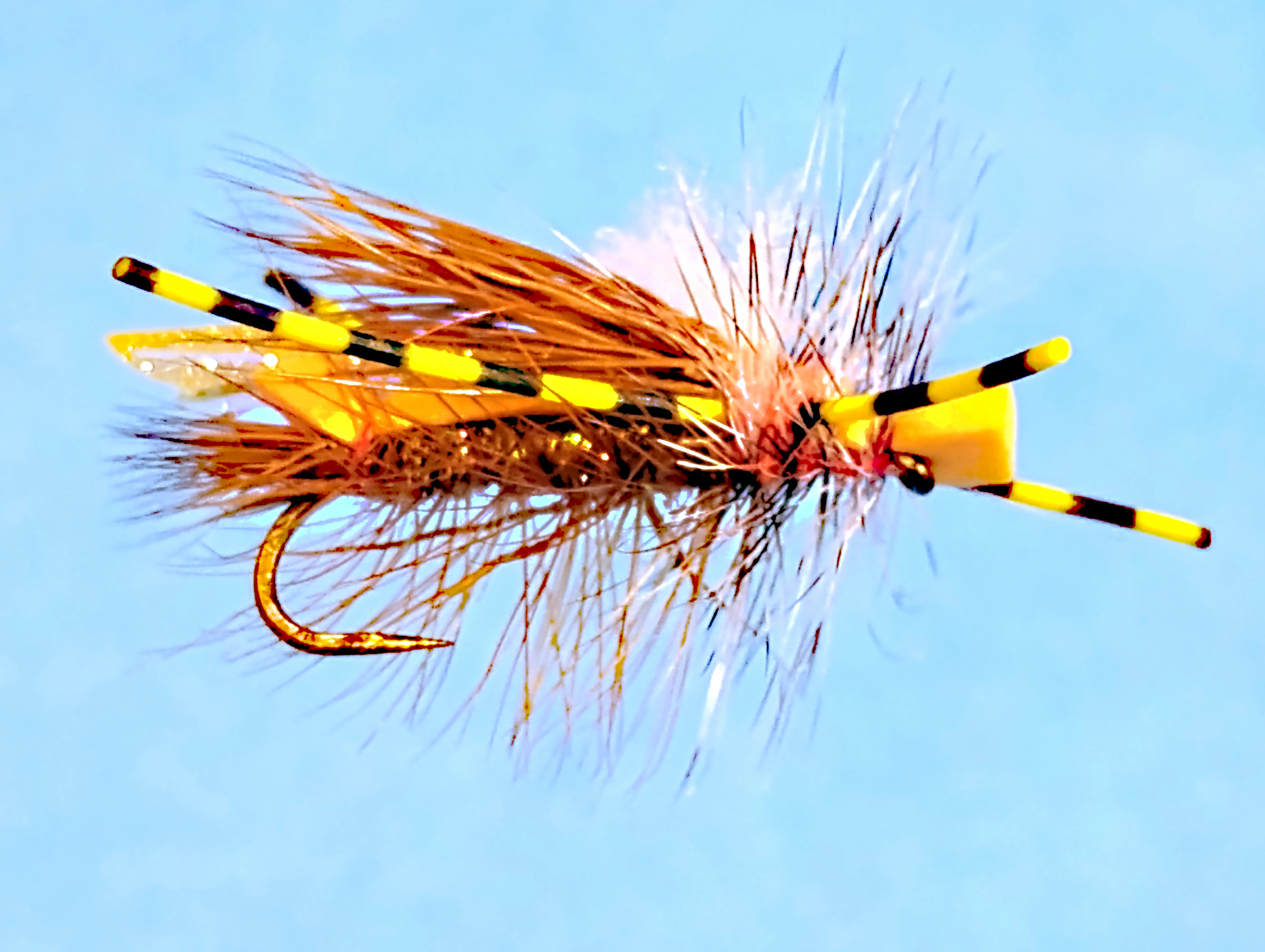 |
FOAMULATOR,
GOLDEN
Hook:
5263BL (mono loop dropper) size 8,10
Thread: Fl fire orange
Tail: Deer or elk, dyed gold
Rib: Gold wire
Foam: Golden from Wapsi
Abdomen: Golden STS tri lobal
Palmer: Light brown or dark ginger saddle
Flash: Orange, gold and pearl Krystal Flash and pearl mirror
Under Wing: Hopper yellow or gold web wing
Over Wing: Deer or elk dyed gold
Indicator: White poly or color of choice
Legs: Round rubber, yellow/black
Hackle: Grizzle saddle
Thorax: 2 part, Kaufmann Stimulator Flame or STS Tri Lobal
Fl. Flame, or other and peacock
|
|
|
|
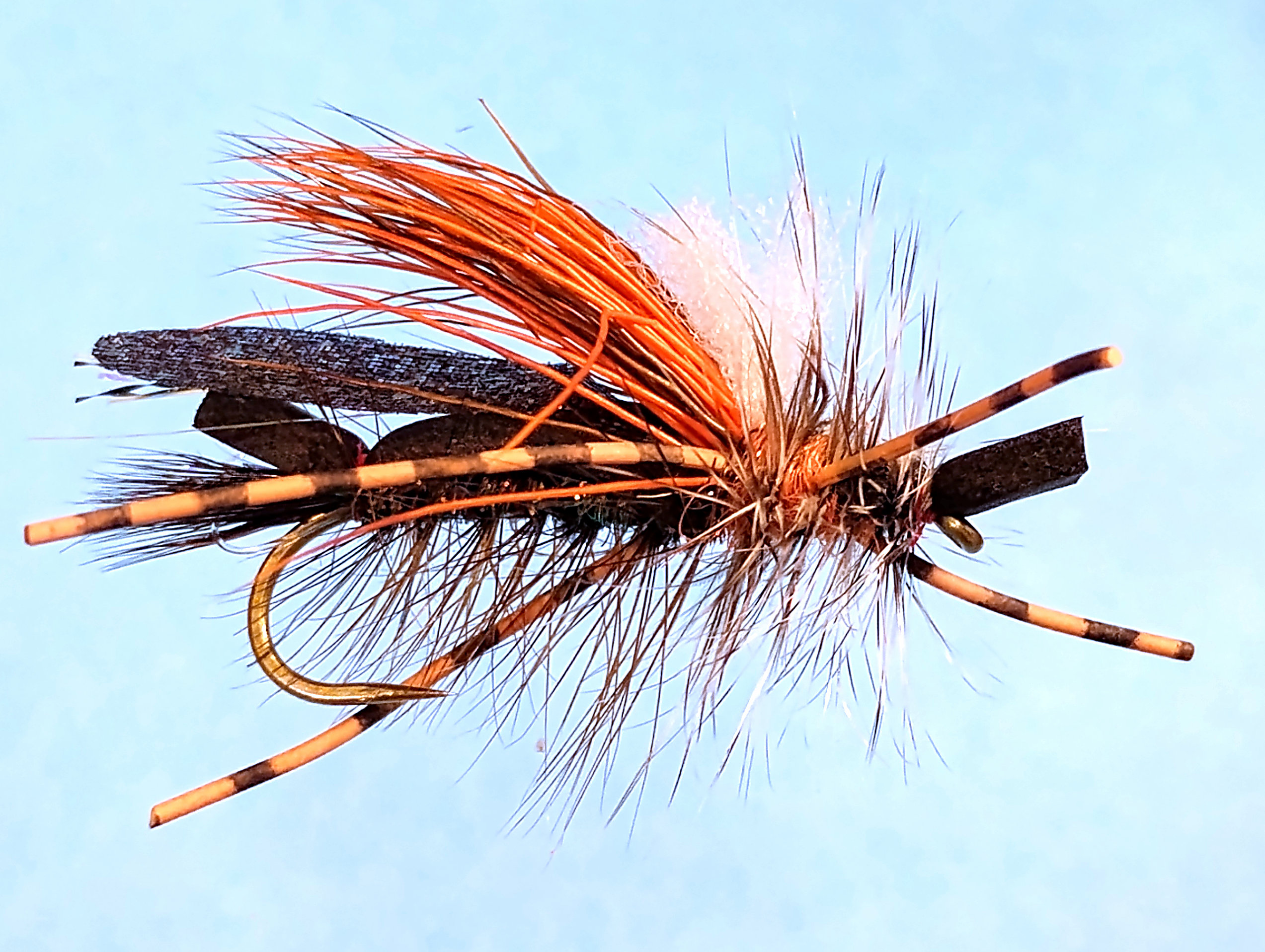 |
FOAMULATOR
GIANT BLACK (Salmonfly)
Hook:
5263BL (mono loop dropper) size 6,8
Thread: Fl fire orange
Tail: Black deer or elk
Rib: Gold wire
Foam: Black
Abdomen: Peacock ice dub
Palmer: Grizzly saddle dyed dark brown
Flash: Black and pearl Krystal Flash and pearl mirror flash
Under Wing: Black web wing
Over Wing: Dark brown and orange deer mix
Indicator: White poly yarn
Legs: Speckled orange medium size 6-10, mini 12 and smaller
Hackle: Grizzly saddle
Thorax: Fl orange SLF
|
|
|
|
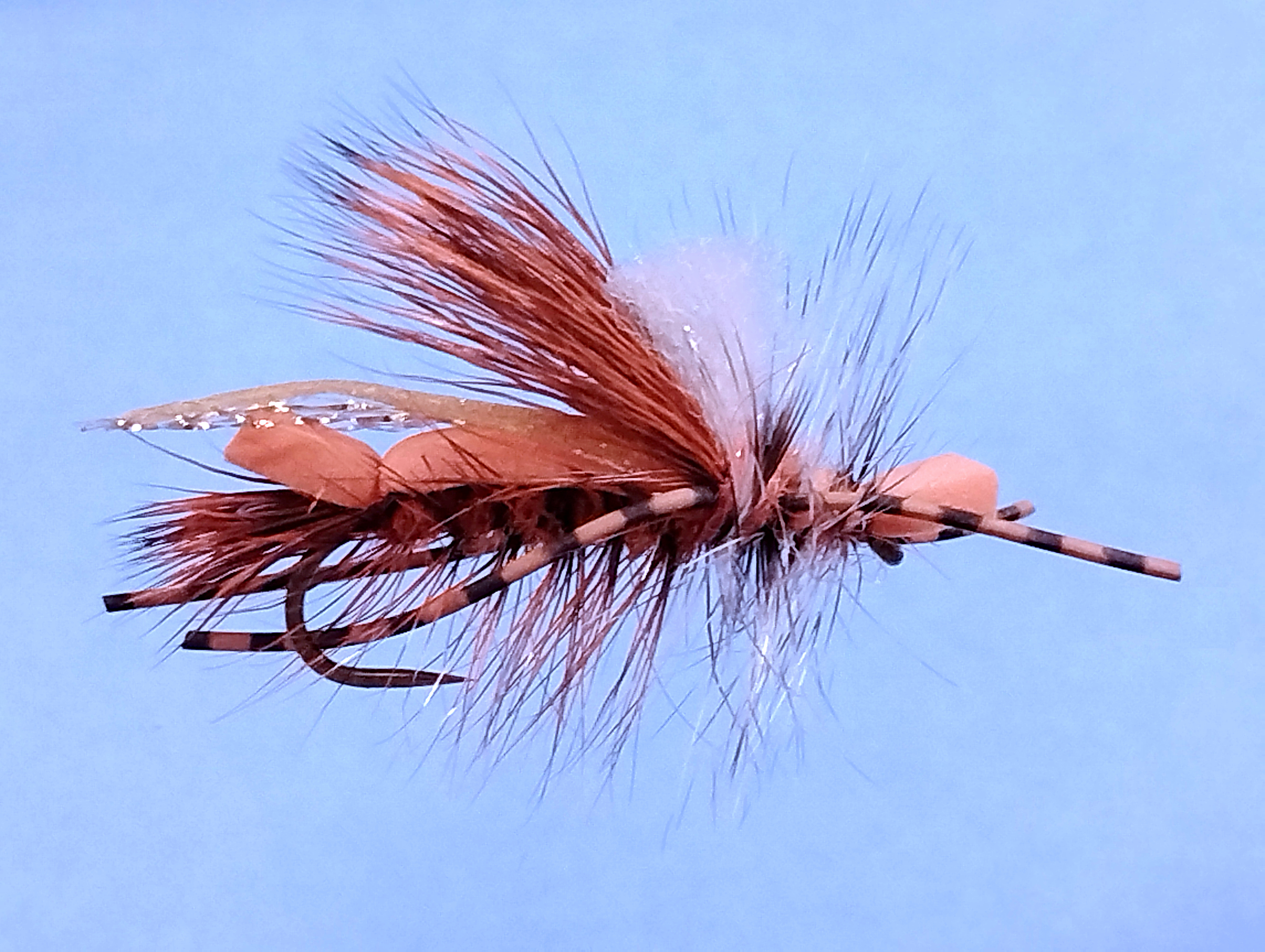
|
FOAMULATOR
GIANT ORANGE
Hook:
5263BL (mono loop dropper) size 8,10
Thread: Fl fire orange
Tail: Orange deer
Rib: Gold wire
Foam: Orange from Wapsi
Abdomen: Hot orange STS tri lobal
Palmer: Grizzly saddle dyed hot orange
Flash: Orange, gold and pearl Krystal Flash and pearl Mirror
Flash--double ends back over for over wing
Under Wing: Hopper yellow web wing
Over Wing: Orange deer
Indicator: White poly
Legs: Speckled orange medium size 6-10, mini 12 and smaller
Hackle: Grizzly saddle
Thorax: Fl orange SLF
|
|
|
|
|
|